Is Sierra Leone, without Internet and Free Software, just a knowledge landfill?
(This is the second and last part (the first is here) of the report by Lucia Mazzoni about computer science and education in Sierra Leone. Paragraphs in bold starting with my name are my own comments, added later.)
The priests in Sierra Leone who asked me to help them with their computers were sometimes victims of the lack of Internet access mentioned in the first part, which didn’t allow them to download better programs or software updates that would make those computer run better.
One day, when I had almost finished to fix Father Luigi’s laptop, one of his brother came saying “I too have a problem with my computer!”. Father Luigi said, “but yours is a 3 years old laptop: it’s old, all you can do is get a new one” (Of course! Running Windows, it’s full of viruses and useless crap that bog them down!).
I felt the pain inside me: PC consumerism really is a terrible thing to see in the reality of these people: so full of life, yet so deprived of opportunities! And I kept thinking to all these unnecessary expenses caused by Windows: it seems so absurd to spend money for such reasons, in such places.
Another local priest, Father Peter, had bought last October a laptop in Italy, with its authentic Windows 7 OEM license. Then, when he got back to his Parish Without Internet access, that laptop became as good as a door stop, since he had never registered his regularly purchased license. I had never tried to do something like that, and as of today I don’t know if it’s possible to register by phone, because every way I’ve found and tried eventually required Internet access.
I tried to explain to Father Peter that he should go with the laptop to some place with Internet access, for example the closest mission, that has a satellite connection. I don’t think he understood, and likely he’s still convinced to have been tricked to buy a slow, useless and worthless computer.
When the local Bishop asked me if I could help him to deal with an email attachment that “wouldn’t open”, I found he had a laptop unbearably slowed and plagued by malware. But I did not say anything, I just opened the attachment, there was no time for reasoning.
Sure, these things also happen in Italy, but here if I want to fix them I can! There in Sierra Leone, instead, I feel that using Windows makes you victim of such problems more than Linux: having only occasional, or very slow Internet connections is an even bigger rip off when you get some virus or malware.
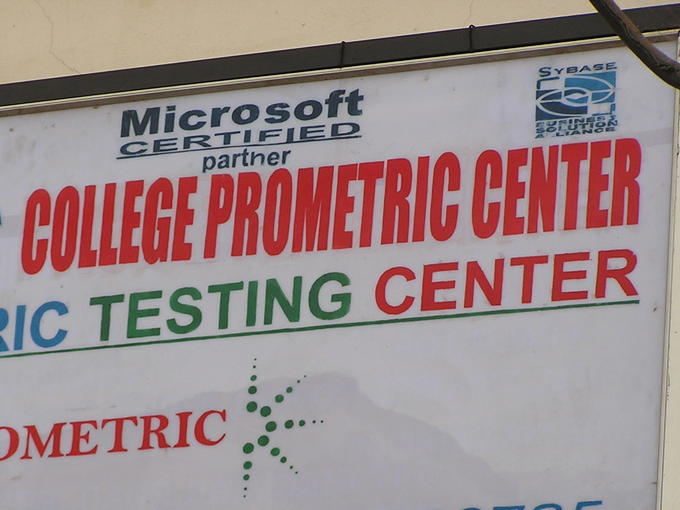
It’s also for these reasons that I found particularly unacceptable to see in Sierra Leone dusty shops carrying unlikely “Microsoft Certified Center” signs: what is the sense of that certification? What kind of meaningful skills does it bring?
“One day they took me to visit a kind of “polytechnic” school run by a indian Catholic priests, near the town of Makeni, with an ICT lab sporting 50 PCs running Windows XP/Vista and, they proudly told me, even Windows 7.”
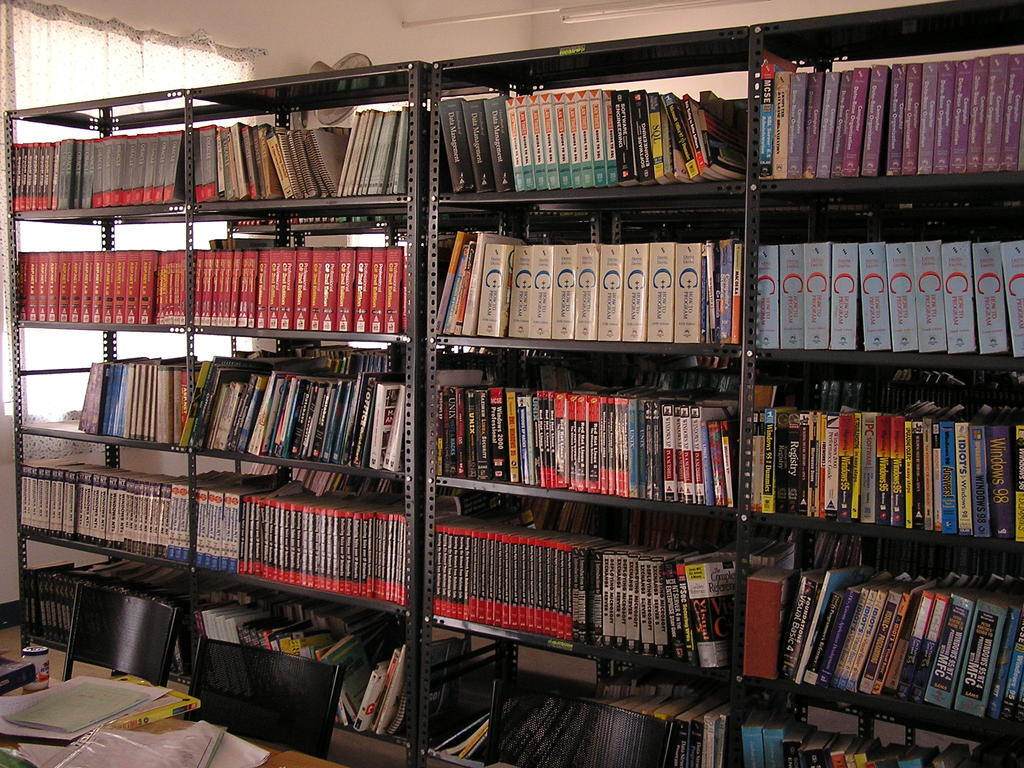
This is a school visited and praised by local politicians including, I was told, the President. I asked to see the library and found there mostly old Windows books, clearly “decommissioned”: technologically old, useless books. Can it be that, even when it comes to books (and, by extension, knowledge), underdeveloped African countries are just a landfill for the Global North?
The questions that make my head boil
Is it possible, in those countries, to study today the computer science of yesterday? Is it useful? To whom? Is it useful just to leave these people in a state of “submission”? The point is, such practices do not provide knowledge that is useful to improve one’s life.
What if they invested in Linux and Internet access instead? Why does that “polytechnic” has no server and no Internet access?
If you ask me, in places like these I’ve visited there should be only Linux and Internet access, instead: rods that people can learn to use to catch fresh fish by themselves, instead of that other same old, stale fish.
Who writes this, why, and how to help
I am Marco Fioretti, tech writer and aspiring polymath doing human-digital research and popularization.
I do it because YOUR civil rights and the quality of YOUR life depend every year more on how software is used AROUND you.
To this end, I have already shared more than a million words on this blog, without any paywall or user tracking, and am sharing the next million through a newsletter, also without any paywall.
The more direct support I get, the more I can continue to inform for free parents, teachers, decision makers, and everybody else who should know more stuff like this. You can support me with paid subscriptions to my newsletter, donations via PayPal (mfioretti@nexaima.net) or LiberaPay, or in any of the other ways listed here.THANKS for your support!